

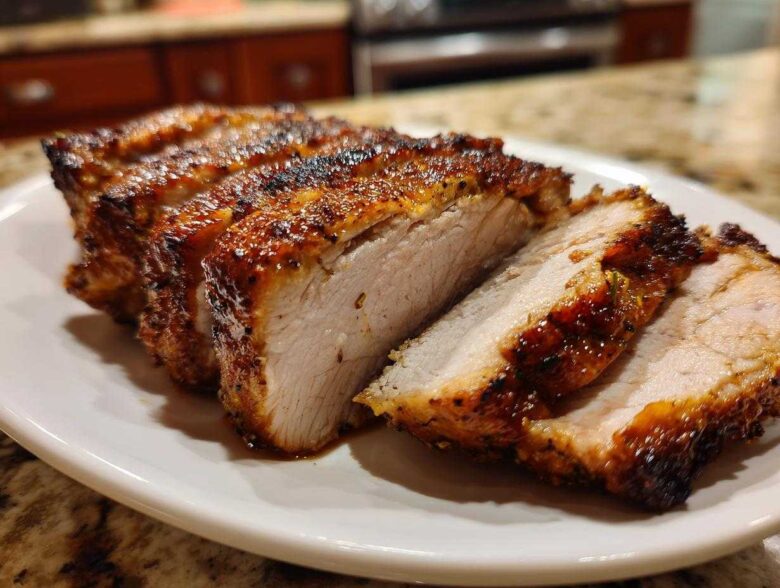
If you’ve ever stared down a beautiful hunk of meat and worried you’d end up with something dry and disappointing, trust me, I get it. For years, my kitchen was full of quiet self-criticism. But that changed when I met Simon, and now, making an amazing pork loin roast feels like cheating because it’s so wonderfully easy! We designed this recipe to be your ultimate guide for achieving that perfect, tender, and juicy pork loin roast, whether you need an impressive centerpiece for a Sunday roast recipe or just a quick, delicious weeknight dinner that everyone will cheer for. Forget stressing over timing; this method is engineered for guaranteed wins, giving you the kudos you deserve just for trying!
If you want to read more about how we try to bake praise into everything here at Kitchn Kudos, you can check out our story on the About Us page. It really is the secret ingredient!
Why This Juicy Pork Loin Roast Deserves a Spot in Your Rotation
Honestly, I nearly shelved this recipe for a long time because I thought a succulent roast required a mile-long ingredient list. Nope! We’re working with just six simple items here, making it the ultimate easy pork dinner. My favorite part, though, is how foolproof it is. Simon always tells me, “Alice, the praise comes from the effort, not the flawlessness!” That encouragement turned this into a guaranteed success, so you are going to get that signature juicy pork loin every single time you make it. It’s truly set-it-and-forget-it magic.
Perfect for Weeknight Dinner or Sunday Roast Recipe
This recipe lives up to its versatility promise. Because the prep takes barely ten minutes, it slides right into a busy weeknight schedule when you need something impressive fast. But don’t let that fool you—it’s robust enough for a proper Sunday roast recipe, too! Just set your timer and enjoy the good smells filling your kitchen. You get all the satisfaction of a big roast without the commitment of all-day cooking. See? Another win worth celebrating!
Ingredients for Your Perfect Pork Loin Roast
When you look at this list, I want you to feel relief, not dread. This is what I mean about recipes designed for wins—we aren’t relying on complicated, hard-to-find components. We’re sticking to the basics because a fantastic pork loin roast really only needs excellent quality meat and a few key players to make it sing. You’ve got everything you need right here for a wonderfully seasoned, tender result.
- 3 lb pork loin roast, bone-out
- 2 tablespoons olive oil
- 1 tablespoon kosher salt
- 1 teaspoon black pepper
- 1 teaspoon garlic powder
- 1 teaspoon dried thyme
Ingredient Notes and Simple Substitutions
Okay, two tiny but crucial things before we move on to the oven. First, that pork loin roast? It has to be dry—and I mean truly dry. Grab those paper towels and really pat it down after washing if you wash your roasts (I know, sometimes we just pat!). If the surface is damp, that initial high heat we use won’t form that gorgeous crust we want. It’ll steam instead of sear, and we’re aiming for texture!
Second, the thyme is lovely for that classic roast flavor, but if you have fresh rosemary, feel free to swap it out teaspoon for teaspoon! Rosemary and pork are old friends, and using fresh herbs when you have them is always a great way to get those extra kudos from your dinner guests. Just remember, fresh herbs release moisture, so make sure that roast is still dry before rubbing on your paste!
How to Prepare Your Oven Roasted Pork Loin Roast
This is where we turn simple ingredients into that show-stopping, tender pork loin roast. My favorite part of this technique is that initial blast of high heat. It’s like giving the roast a little wake-up call! Don’t worry about overcooking it; that first burst sets the stage for incredible flavor development later on. Follow these steps precisely, and you’ll see why this is such a reliable easy pork dinner method. Simon always cheers when I pull out the instant-read thermometer—he calls it my success wand!
- First up, get that oven fired up to 425 degrees Fahrenheit. High heat gets things moving fast! I usually use this time to put on a favorite song, maybe something upbeat, so Simon can get his celebratory dance moves ready.
- Time to dry that meat again! Seriously, pat it down with paper towels until you think it can’t get any drier. A dry surface means a good sear.
- In a little bowl—I use my smallest prep bowl—mix up your paste. It’s just the olive oil, salt, pepper, garlic powder, and thyme whisked together until it looks like a thick, herby sludge. Yes, sludge! That’s what sticks best.
- Now, grab that paste and just rub it all over the roast. Use your hands and really massage it in there. Cover every inch of that beautiful piece of meat. I love doing this part; it’s tactile and connects you to the food, kind of like when I’m making my zesty lemon garlic marinade.
- Place the seasoned pork loin roast onto your roasting pan or a sturdy, rimmed baking sheet.
- Put it into that 425-degree oven for exactly 15 minutes. This gets us the exterior texture we love.
- After the 15 minutes are up, here is the secret switch! Turn the oven temperature straight down to 350 degrees Fahrenheit. You’ll keep roasting it there until your thermometer tells you it’s done. For timing, figure about 15 to 20 minutes per pound *total* cooking time. It takes patience, but knowing when to rely on the thermometer makes all the difference in achieving a fantastic oven roasted rib roast alternative.
- Pull that roast out the second your instant-read thermometer hits 140 degrees Fahrenheit.
- Move it to a clean cutting board immediately. Seriously, don’t skip this next step! Tent it loosely with foil—don’t wrap it tight, or the crust will get soggy! This resting period is non-negotiable for a tender, juicy result.
- Once rested, slice it up against the grain and get ready for applause!
Achieving the Ideal Pork Loin Internal Temp
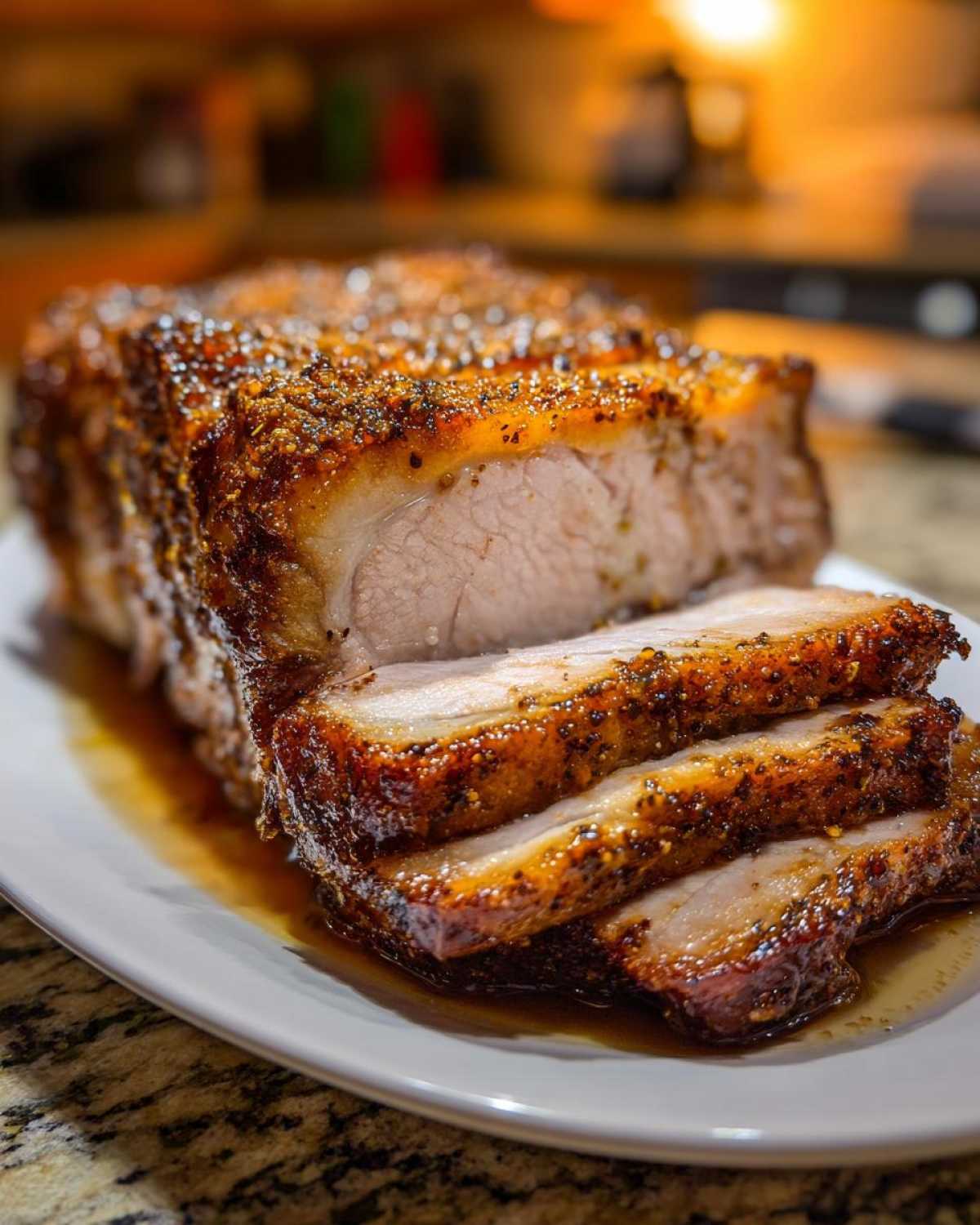
You absolutely must trust your thermometer here. If you’re aiming for that perfect, slightly pink, incredibly tender center for your pork loin roast, the target removal temperature is 140 degrees Fahrenheit. I know some recipes say 145°F minimum, and yes, that is the *final* safe temperature, but we need to account for carryover cooking! That 140°F reading is your signal to yank it out of the blistering heat. Why? Because as it sits resting under that foil tent, the internal temperature will climb another 5 degrees, landing you perfectly at 145°F, guaranteeing a juicy pork loin without any risk of drying it out.
The Mandatory Resting Period for Your Pork Loin Roast
I used to think resting meat was just something people said, but Simon taught me why it’s vital. If you slice into this roast the second you pull it from the oven, all those beautifully collected juices—the ones that make your dish so succulent—will eagerly run out onto your cutting board. We want those juices *in* the meat, right? Letting the pork loin roast rest for at least 10 minutes lets the muscle fibers relax and reabsorb the moisture. It’s an act of delicious trust; you wait patiently, and the meat rewards you with that melt-in-your-mouth tender slice.
Creating a Simple Pan Sauce Gravy for Your Pork Loin Roast
This is the part where even the simplest weeknight dinner feels like a five-star meal! Seriously, don’t even think about tossing those browned bits in the bottom of your roasting pan—that’s pure flavor gold! Making a quick pan sauce gravy using those drippings is so straightforward, and it elevates this already wonderful pork loin roast to new heights. It’s another one of those small steps that earns you serious kudos from your family. This method comes right from our notes, and it takes less than five minutes.
First things first: As soon as you pull that beautiful roast out to rest, put the roasting pan right on the stovetop over medium heat. You want to get those fond bits—the brown crusty bits stuck to the bottom—moving again. Use a wooden spoon or a spatula to scrape up every last speck! That’s the backbone of your gravy.
Next, pour in about one cup of chicken broth. Keep stirring gently until all those flavorful bits dissolve into the liquid. Let that mixture come to a gentle simmer. You’ll smell the flavor intensifying immediately, which is always a good sign!
If you feel like it needs a little more body, here is my famous thickening trick. Mix one tablespoon of cornstarch with just two tablespoons of very cold water in a separate tiny dish until it’s smooth—it becomes a slurry. Slowly whisk this slurry into your simmering broth. Keep stirring and watch how quickly it thickens up into the perfect, rich coating for your slices. If you prefer something creamy, you can check out how to make a quick creamy sauce, but for this roast, the drippings gravy is perfection. A little drizzle of this over the sliced pork loin roast and dinner is officially a success!
Tips for Success with Oven Roasted Pork
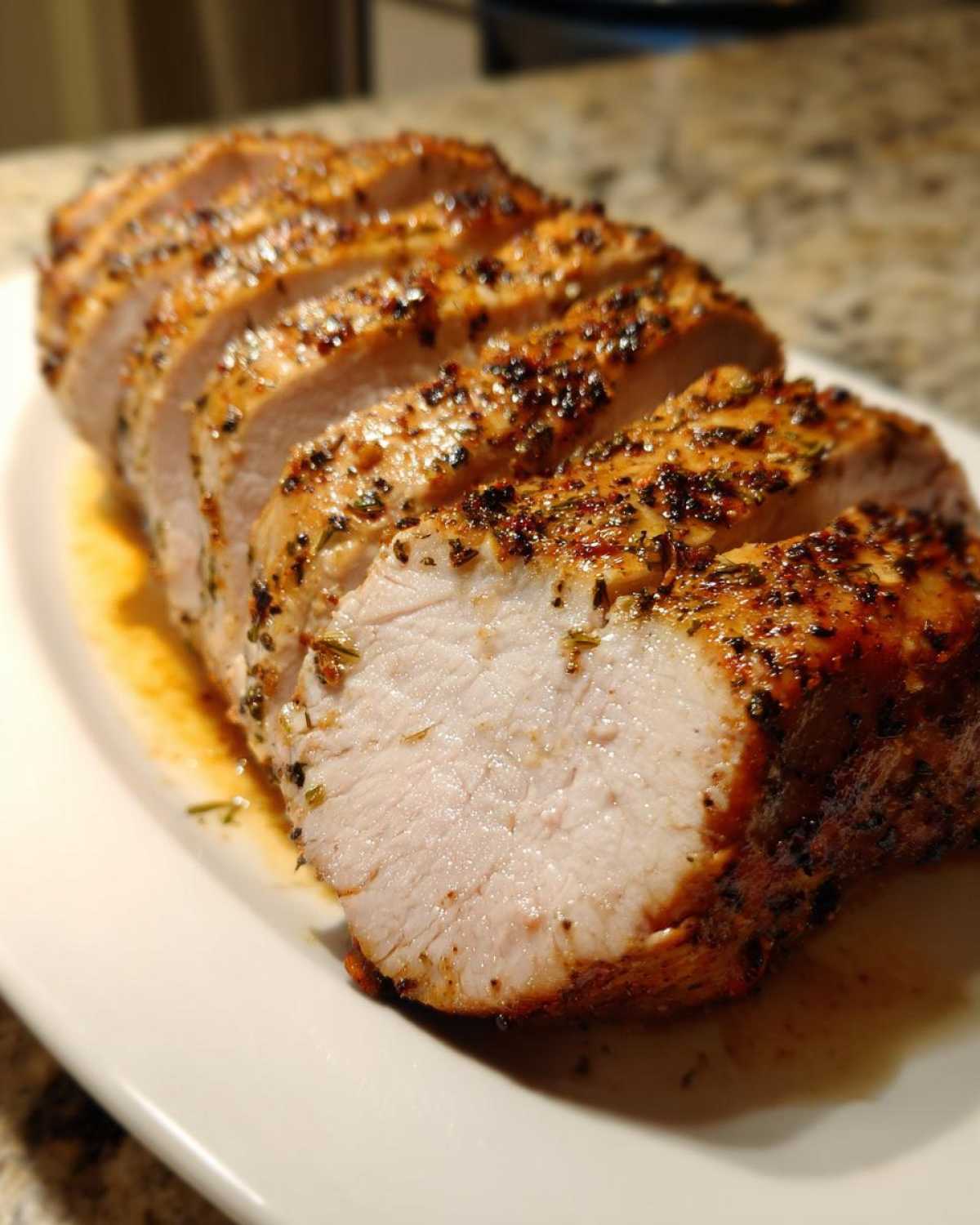
Even though this recipe feels straightforward, there are a few small moves you can make that really separate a good roast from a *great* roast. Remember, E-A-T—expertise and trustworthiness—comes from knowing the little details that other recipes skip! Simon always says these tiny steps are what make you feel like a kitchen pro, earning you that extra high-five.
Here are the tips I’ve learned over the years that guarantee we get the juiciest pork loin roast possible:
- Don’t Skip the Dry Rub Down: I know I mentioned patting it dry before the paste, but let me hammer this home again. If your pork loin roast is shedding any moisture when you rub that herb paste on, it’s wasting time trying to form a crust. Make sure it is desert-dry first. This is how you maximize surface browning, making the outside flavorful while keeping the inside super tender. It’s a small thing, but it makes that exterior sear so much better, similar to how we get that amazing crisp skin on our spatchcock chicken!
- Invest in a Good Thermometer: If you are serious about hitting that perfect pork loin internal temp of 140°F before the rest, you need an instant-read thermometer. Guessing, or using the oven’s built-in gauge, is what leads to disappointment. An instant-read thermometer gives you the precise reading you need to pull the roast at the exact right moment, ensuring maximum juiciness before the carryover cooking takes over. It’s the single best tool for turning this into an easy pork dinner success.
- Room Temperature is Not Your Friend (Until Later): For this specific recipe, we aren’t letting the roast sit out for an hour like some cakes. We want the initial blast of 425°F to be working on cold meat. This helps shock the exterior fibers before we drop the heat. Only after you pull it out do you let it sit on the cutting board—that resting phase is critical for keeping those juices locked in!
- Slice Against the Grain, Period: This isn’t technically a cooking tip, but it’s crucial for *eating* success. Look closely at the cooked pork loin roast; you’ll see the fibers running in one direction. Slice perpendicular to those lines! Slicing against the grain shortens the meat fibers, making every single bite feel incredibly tender, even if you accidentally left it in for an extra minute.
Storage and Reheating Instructions for Leftover Pork Loin Roast
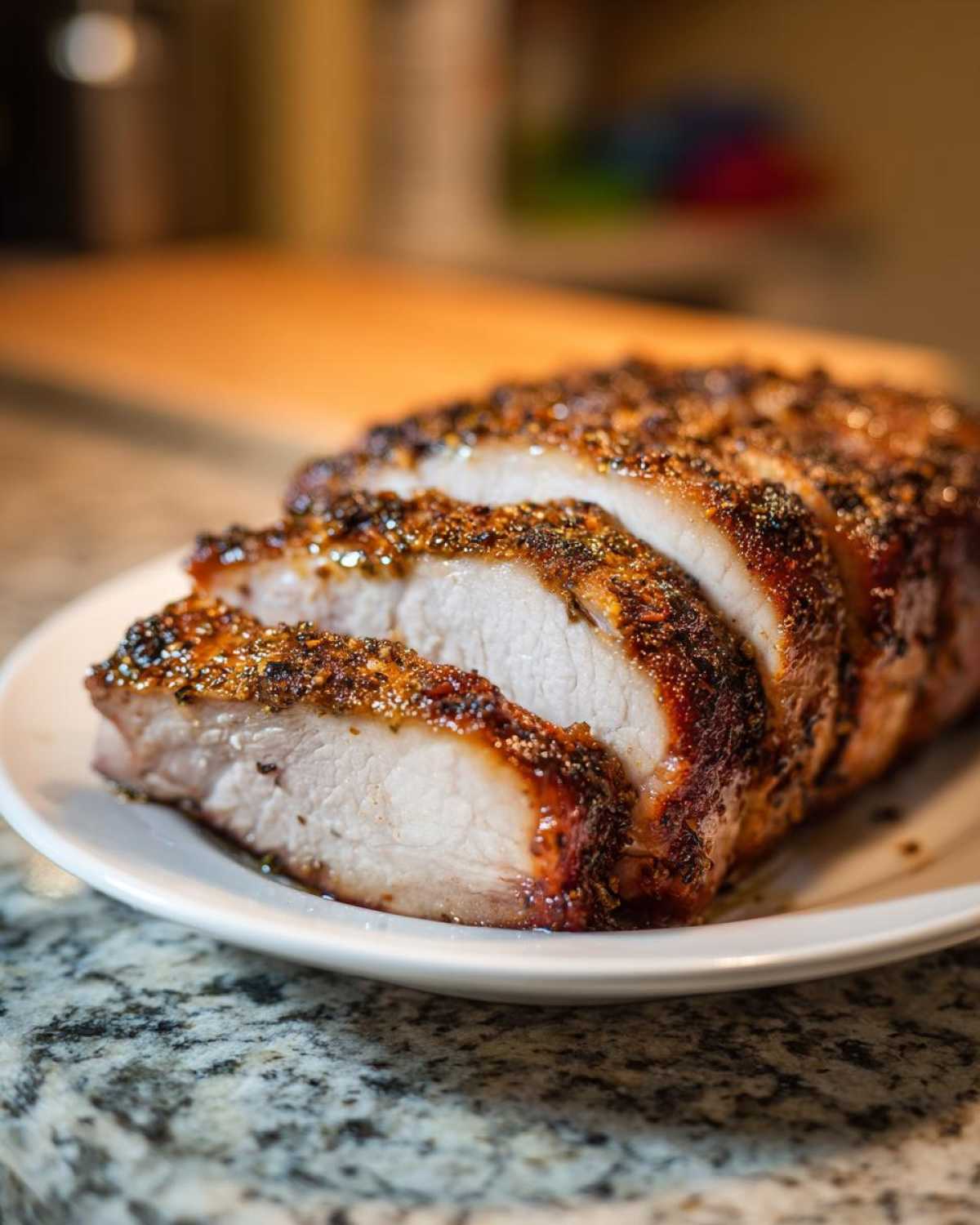
One of the greatest perks of making a larger pork loin roast is having leftovers ready for another fantastic meal later in the week. Because this roast is so naturally juicy to begin with, we have to be extra mindful when reheating it, or else we risk losing all that moisture we worked so hard to capture! Simon loves our leftovers for quick lunches, and he insists on treating the meat gently so it tastes almost as good as the first night. This turns an already easy pork dinner into an even easier one for the next day!
When storing, make sure the slices or the remaining roast chunk are completely cooled down before tucking them into an airtight container. Keep that meat in the fridge for up to three or maybe four days—any longer and you start losing that pristine texture.
Keeping Slices Juicy When Reheating
Never, ever try to reheat individual slices of pork loin roast in a loud, dry microwave blast! That’s a recipe for tough, chewy meat, and that certainly won’t earn you any kitchen kudos. We want warmth, not a complete re-cook.
My absolute favorite way to revive slices is a gentle oven treatment. Place your desired number of slices in a shallow baking dish. Now, here’s the trick: pour in just a tablespoon or two of liquid. This could be leftover pan sauce gravy, or even simple broth or water. The liquid turns to steam in the oven, bathing the pork loin roast slices in moisture while they warm up. Cover the dish tightly with foil—this traps the steam—and pop it into a low oven, around 300°F. They only need about 10 to 15 minutes to warm through completely. This steaming technique ensures every slice is tender and ready to enjoy.
If you’re having a particularly busy day and need something faster, you can use a very low setting on the stovetop in a skillet with just a teaspoon of oil and a splash of broth, covered, but I still think the oven method gives a more even, pleasant texture. If you’re looking for ideas on how to make other leftovers taste brand new, check out my instructions on making a hearty turkey pot pie; the same principle of adding moisture applies!
Serving Suggestions for Your Pork Loin Roast
So, you’ve mastered the juicy pork loin roast, it’s resting perfectly, and that pan sauce gravy is simmering away—kudos to you! Now we just need the supporting cast to complete our perfect Sunday roast recipe. Because this pork loin roast is flavorful but relies on simple herbs, you have so much room to play with your sides. We want things that complement the savory meat without demanding an all-day commitment from you, because remember, we’re aiming for easy pork dinner success here!
Here are two pairings that always earn me the biggest applause at the dinner table:
Roasted Root Vegetables with Honey Glaze
Nothing says Sunday roast like deeply caramelized carrots, potatoes, and maybe some parsnips if you’re feeling fancy. Just chop your sturdy veggies into even chunks—consistency is key for even cooking! Toss them with a drizzle of olive oil, a good sprinkle of salt and pepper, and then—here’s the trick—a light drizzle of honey right before they go into the oven for the last 30 minutes of the roast. That honey caramelizes beautifully, giving you a sweet crust that plays so nicely against the savory, herby crust of the pork loin roast. It’s simple, hands-off, and adds wonderful color to the plate.
Mashed Potatoes Reinvented (Hello, Duchess Potatoes!)
While classic mashed potatoes are always a comforting choice for soaking up that delicious pan sauce gravy, sometimes I want something with a little more oomph and presentation factor, especially when Simon is watching! That’s why I adore making Duchess Potatoes. They look incredibly impressive—like little piped swirls—but they are surprisingly easy to execute. You’re basically combining creamy mashed potatoes with egg yolks, which makes them hold their shape beautifully when baked until golden brown on the edges. They look like they took hours, but you can whip them up while the pork is resting, making this an absolute stunner of an easy pork dinner!
A Quick, Bright Green Side
To cut through the richness of the roast and the gravy, you always need something bright and green. My go-to is simple sautéed green beans or asparagus. All you need is a hot skillet, a little butter or oil, and maybe a squeeze of fresh lemon juice right at the very end to brighten everything up. This takes about seven minutes total, and it adds that essential fresh snap to your plate. Keep it simple, folks; the focus should be on that perfectly cooked, juicy pork loin roast!
Frequently Asked Questions About This Pork Loin Roast
Whenever I share a recipe that relies heavily on temperature like this one, I always get a fantastic flurry of good questions! It shows me you’re thinking ahead, which is exactly what Simon says leads to those big kitchen kudos moments. You want to be prepared, not panicked! Here are a few things I hear often about getting that perfect pork loin internal temp and executing this oven roasted pork successfully.
Can I skip the initial high heat step?
I totally understand the temptation to just set the oven once and walk away, making it an even faster weeknight dinner setup, but please, please don’t skip that initial 425°F blast! That first 15 minutes is what creates the magnificent crust on the outside of your pork loin roast. If you start too low, the meat cooks slowly before the outside has a chance to brown, and you end up with meat that’s gray and a bit soft on the exterior rather than richly flavorful. We want that textural contrast in our juicy pork loin, so that initial heat really is mandatory for this method!
What if my roast is smaller or much larger than 3 lbs?
That’s a great question for estimating an oven roasted pork time! The rule of thumb we used for the 3 lb roast was 15 to 20 minutes per pound total cooking time once you drop the temperature to 350°F. So, if you have a 2 lb roast, you’re looking at roughly 30 to 40 minutes total at the lower temp, plus that initial 15 minutes at 425°F. If you have a massive 5 lb roast? It will take longer, maybe closer to an hour at 350°F. The absolute best way to know is to rely on that instant-read thermometer! The timing is just a guide; the pork loin internal temp is the boss.
What is the safe minimum pork loin internal temp?
This is so important, and I’m glad you asked! For safety, the USDA recommends that pork be cooked to a minimum of 145°F. Because we focus on maximum juiciness here at Kitchn Kudos, we pull the roast out at 140°F. Why? Because of that crucial 10-minute rest. During that resting time, the temperature continues to climb by about 5 degrees, safely reaching 145°F while the moisture redistributes. Never serve pork that the thermometer reads under 140°F before resting! If you want more general kitchen wisdom and tips on cooking, check out our main blog page!
Can I skip the seasoning paste and just use a dry rub?
You certainly could, but I highly encourage you to try the oil paste first! The oil acts as a binder, holding all the kosher salt, pepper, and thyme directly against the meat in a nice, thick protective layer. A dry rub tends to blow right off during that initial high-heat phase, leaving parts of your roast under-seasoned and potentially leading to an uneven crust. The paste ensures that every millimeter of your pork loin roast gets coated for deep flavor development. It’s a small extra stir, but it really pays off!
Can I cook this pork loin roast from frozen?
Oh, sweetie, no! Please don’t try this high-heat method on a frozen roast. If you cook a frozen roast, the exterior will burn or overcook significantly before the center even starts to defrost properly. You’ll never hit that perfect, consistent pork loin internal temp of 140°F, and you’ll certainly end up with a dry exterior and a cold center. If you forgot to thaw, the safest and tastiest route is to thaw it safely in the fridge overnight first. We want success and praise, not culinary disasters!
Applauding Your Effort: Share Your Juicy Pork Loin Roast!
Well, look at you go! You just tackled and conquered a delicious, tender, and perfectly seasoned pork loin roast. Didn’t that turn out even better than you hoped? I want you to take a moment right now and give yourself a huge round of applause. Seriously, stop reading for one second and high-five yourself! You followed the steps, you trusted the timing cues, and now you have a fantastic meal ready to serve.
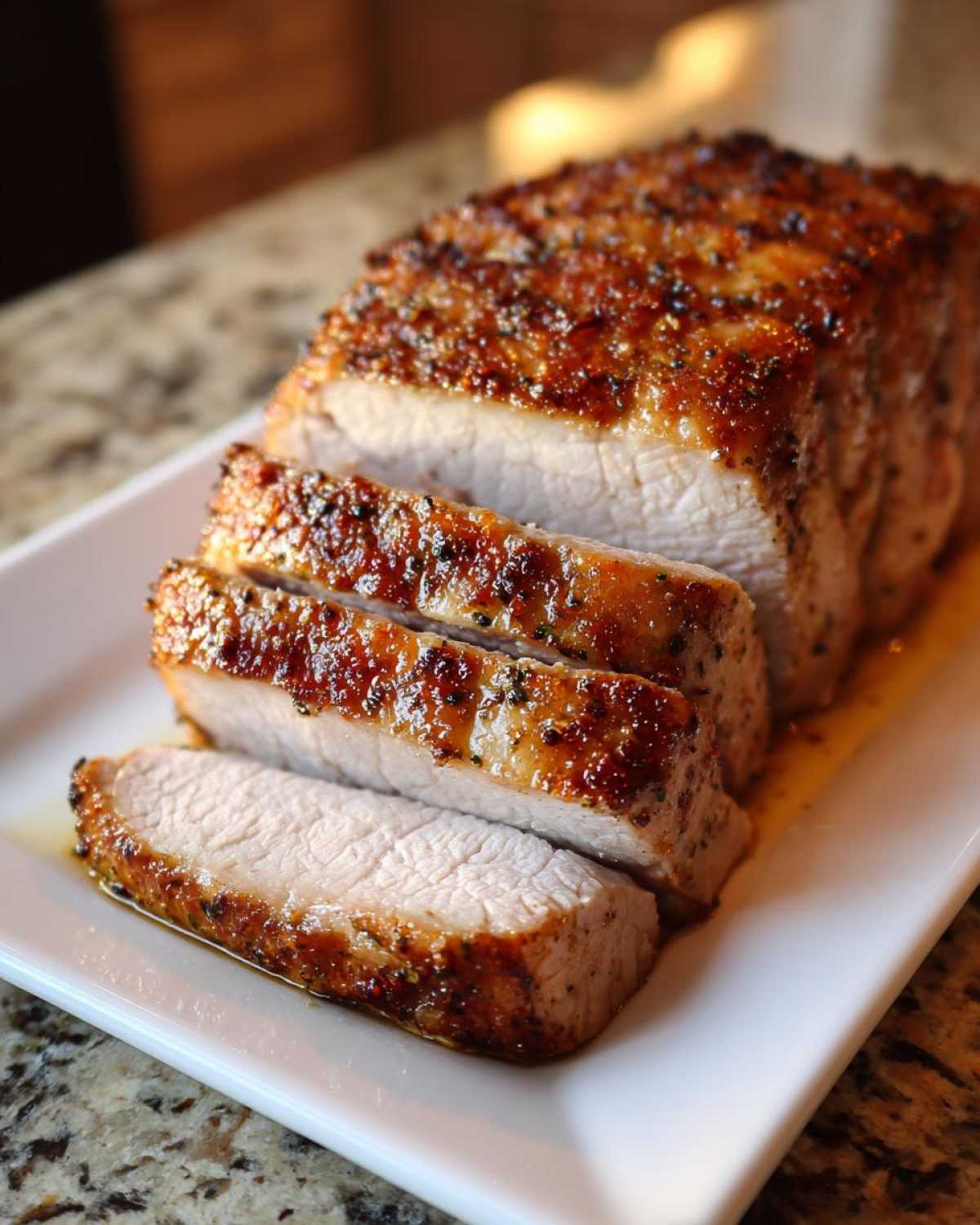
That’s the whole point of Kitchn Kudos—taking away the pressure so you can enjoy the win. Whether this was your first time roasting pork or you are a seasoned pro who just needed a reliable technique, I truly hope this resulted in a guaranteed moment of joy at your table. That sense of accomplishment when you slice into that succulent meat is unbeatable!
If you loved how easy this easy pork dinner turned out, please consider leaving a star rating for this recipe right down below. It helps other cooks who might be feeling nervous about roast night. And if you have a moment, drop a comment and let me know how it went! Did you try the pan sauce gravy? Did you feel proud when you served that perfectly juicy pork loin? We absolutely love hearing about your successes!
If you ever have questions, or maybe just want to send Simon a note about his encouraging kitchen vibe, you can always reach out through our Contact page. Keep celebrating the small, delicious victories, and happy cooking!
PrintJuicy Oven Roasted Pork Loin Roast
Make a tender and juicy pork loin roast using simple ingredients and clear oven instructions for a perfect weeknight dinner or Sunday roast.
- Prep Time: 10 min
- Cook Time: 75 min
- Total Time: 85 min
- Yield: 6 servings
- Category: Dinner
- Method: Oven Roasting
- Cuisine: American
- Diet: Low Fat
Ingredients
- 3 lb pork loin roast, bone-out
- 2 tablespoons olive oil
- 1 tablespoon kosher salt
- 1 teaspoon black pepper
- 1 teaspoon garlic powder
- 1 teaspoon dried thyme
Instructions
- Preheat your oven to 425 degrees Fahrenheit.
- Pat the pork loin roast completely dry with paper towels. This helps create a good crust.
- In a small bowl, mix together the olive oil, kosher salt, black pepper, garlic powder, and dried thyme to create a paste.
- Rub the spice paste evenly over the entire surface of the pork loin roast.
- Place the seasoned roast in a roasting pan or on a rimmed baking sheet.
- Roast at 425 degrees Fahrenheit for 15 minutes.
- Reduce the oven temperature to 350 degrees Fahrenheit. Continue roasting until an instant-read thermometer inserted into the thickest part of the roast reads 140 degrees Fahrenheit. This usually takes about 15 to 20 minutes per pound total cooking time.
- Remove the pork loin roast from the oven when it reaches 140 degrees Fahrenheit internal temp.
- Transfer the roast to a cutting board and tent it loosely with foil. Let the pork rest for at least 10 minutes before slicing. The temperature will rise to a safe 145 degrees Fahrenheit during resting.
- Slice against the grain and serve immediately.
Notes
- For a simple pan sauce gravy, place the roasting pan on the stovetop over medium heat after removing the roast. Scrape up any browned bits from the bottom of the pan. Add 1 cup of chicken broth and bring to a simmer, stirring until slightly thickened. You can whisk in a tablespoon of cornstarch mixed with 2 tablespoons of cold water to thicken further if desired.
- If you prefer a more intense herb flavor, use fresh thyme instead of dried.
- This recipe works well for a quick weeknight dinner or a more substantial Sunday roast.
Nutrition
- Serving Size: 4 oz cooked
- Calories: 280
- Sugar: 1
- Sodium: 550
- Fat: 12
- Saturated Fat: 4
- Unsaturated Fat: 8
- Trans Fat: 0
- Carbohydrates: 1
- Fiber: 0
- Protein: 40
- Cholesterol: 100