

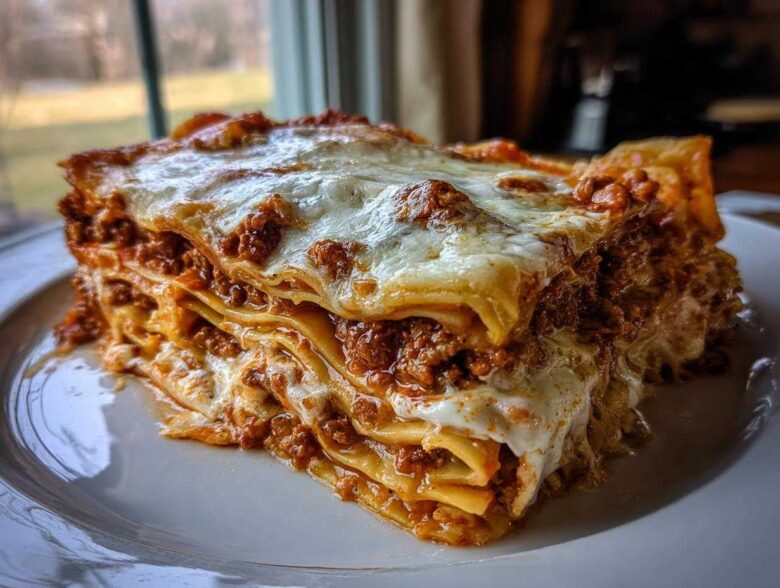
Oh, if there is one dish that just screams happy memories and that perfect, cozy Italian feeling, it has to be lasagna. Forget those sad, watery frozen versions you grab in a pinch! I’m talking about the real deal—the kind that takes a little time but delivers a reward so delicious it makes your whole Sunday feel special. This isn’t just any recipe; this is my absolute best classic homemade lasagna, perfected over about fifteen years of trial and error.
Seriously, when you finally nail that balance between a slow-simmered, rich meat sauce and that incredibly smooth, creamy ricotta layer? You’ve hit gold. No more flimsy layers that slide apart when you try to serve them. I promise you, once you try making this amazing homemade lasagna from scratch, you’ll never look back. This recipe has replaced every other Italian baked pasta dish in our house, hands down!
Why This Classic Homemade Lasagna is Your New Favorite Comfort Food Recipes
Why does this recipe just taste *better* than everything else? Because it hits every single spot you want when you’re craving real Italian food. It’s designed to be the ultimate comfort food recipe that works perfectly for feeding a crowd or turning an average Tuesday into a fantastic family dinner idea.
- Deep Italian Flavor: We’re not rushing the sauce, trust me on this one!
- Texture Heaven: That contrast between the rich meat and the unbelievably creamy ricotta is divine.
- Freezer Friendly: Yes, you can totally hide this in the freezer for later!
Unbeatable Flavor Profile in This Homemade Lasagna
The depth you get from simmering the meat sauce for a full hour is the game-changer here. It’s not just beef and tomatoes; it’s savory, slightly sweet, and deeply seasoned. Then, you balance that richness with the cool, bright ricotta mix. It’s what takes this from a simple pasta bake to a true cheesy lasagna recipe legend in my kitchen!
Make Ahead Lasagna Convenience
I know, I know, it sounds like a big project, but you can totally assemble the entire thing the day before. Seriously! Wrap it tightly, pop it in the fridge, and all you have to do tomorrow is pull it out and bake it. That’s the secret to making this a weeknight winner when you plan ahead!
Gathering Ingredients for Your From Scratch Lasagna
Okay, since we are definitely making this homemade lasagna the right way—from scratch—we need to get our ducks in a row here with the shopping list. I’ve broken everything down below so you can see exactly what goes where. Don’t feel overwhelmed by the list; it’s just a few simple groups of things coming together!
For the sauce base, you’ll need:
- 1 pound ground beef (80/20 is great here)
- 1 pound Italian sausage, casing removed (don’t skip the sausage flavor!)
- 1 large onion, chopped
- 4 cloves garlic, minced
- 2 (28 ounce) cans crushed tomatoes
- 1 (15 ounce) can tomato sauce
- 2 tablespoons tomato paste
- 1 teaspoon dried oregano
- 1 teaspoon dried basil
- 1/2 teaspoon salt and 1/4 teaspoon black pepper
- 1/4 cup water (just in case we need to thin it out later)
Then for that creamy heart of the lasagna, our special ricotta mix:
- 1 (15 ounce) container whole milk ricotta cheese
- 1 large egg (this is the binder!)
- 1/4 cup grated Parmesan cheese, plus extra for topping
- 2 tablespoons chopped fresh parsley
And finally, the layers themselves:
- 1 box (16 ounces) lasagna noodles
- 4 cups shredded mozzarella cheese (Yes, go big on the cheese!)
Ingredient Notes and Substitutions for Homemade Lasagna
Listen, the quality of your tomatoes truly affects your final lasagna with meat sauce. I always grab the good quality crushed tomatoes; they break down better and offer a sweeter base than cheaper brands. Also, when it comes to that luscious filling? You absolutely must use whole milk ricotta cheese. The part-skim stuff is just too watery, and we want a dense, creamy layer, not a runny mess!
If you are in a real pinch, you can use cottage cheese in a pinch, but blend it up first until it’s smooth—that’s the trick! The egg in the ricotta layer is critical, too. It’s not there for flavor; it’s there to keep that beautiful cheesy layer from oozing out everywhere when you finally slice into your perfect homemade lasagna.
Building the Rich Meat Sauce for Classic Homemade Lasagna
Alright, this part is where the real magic happens, and honestly, it’s the part that separates my lasagna with meat sauce from those quick jarred sauces. We are building flavor layer by layer, and it starts with getting a good, honest brown on that beef and sausage. Don’t be shy about draining the fat, but make sure you get some dark color on the meat first!
Get your big, heavy pot out—the one you love for chili—and brown the ground beef and sausage over medium heat. Once they’re nicely browned, scoop out the excess grease. Now, toss in your chopped onion and let it soften up in the leftover meat flavor for about five minutes until it’s smelling sweet. Then we hit it with the garlic for just sixty seconds. Seriously, garlic burns fast, so watch it!
Then, it’s time for the tomatoes! Dump in the crushed tomatoes, the tomato sauce, and that thick tomato paste. Stir in your oregano, basil, salt, and pepper. Bring that whole beautiful mess up to a gentle simmer. This is important: Reduce the heat way down low, cover it, and now we wait. I really, really push for at least one full hour here. If you feel like it’s getting too thick while it’s bubbling away—and trust me, it will thicken because of the tomato paste—just splash in that 1/4 cup of water we listed. That slow simmer is what concentrates the flavor and makes this sauce so rich that your family will ask if you’ve been taking lessons in Italy!
Preparing the Creamy Ricotta Cheese Layer for Your Lasagna
While that amazing meat sauce is getting all deep and savory on the stove, we sneak over to the *other* star of the show: the creamy filling. This mixture is what stops your lasagna from being just a pile of saucy noodles. It holds everything together perfectly once it bakes!
Grab yourself a medium bowl—no need to dirty the stand mixer for this simple step. Toss in your 15 ounces of whole milk ricotta cheese. Then come the flavor boosters: the 1/4 cup of grated Parmesan and a good two tablespoons of fresh, chopped parsley. It brightens everything up, I swear!
Now for the crucial part that you cannot skip: the egg! Crack that single large egg right in there. I hear people ask all the time, “Why the egg?” Well, the egg is the unsung hero that ensures you get that lovely, set, sliceable lasagna with ricotta cheese layer instead of just warm, runny ricotta splashing out when you try to serve it. It acts like cement in the best possible way!
Just mix it all together gently until it’s uniform. We aren’t whipping air into this; we just want it completely combined and smooth. Set that bowl aside, and remember we’ll be spreading this gorgeous white layer over the noodles right after we score the base of the pan. It’s such a quick step, but it makes the final product so much better!
Step-by-Step Assembly of the Layered Pasta Bake
Okay, deep breath! This is the fun part where everything clicks together. We’ve got our rich sauce simmering and our beautiful ricotta mixture waiting patiently. Now we build this magnificent layered pasta bake destined for glory. Grab that 9×13 inch dish you greased up—we’re going section by section!
First things first: don’t forget the noodles! You should have already cooked them until they were just tender (al dente) and laid them out flat so they aren’t sticking together in one giant clump. Now, take a little bit of that meat sauce—just a thin schmear—and brush it all over the bottom of your prepared dish. This stops the bottom layer of noodles from sticking or burning, and it pre-seasons your base layer.
Here’s the repeating pattern. Think of it like perfect building blocks:
- Lay down a layer of your cooked lasagna noodles. Try to overlap them just a tiny bit so you don’t have gaps of sauce peeking through later.
- Take half of that heavenly ricotta mixture and dollop it onto the noodles. Use the back of a spoon or an offset spatula to gently spread it out evenly across the surface.
- Now comes the cheese blanket! Sprinkle about one-third of that shredded mozzarella over the ricotta. Don’t be stingy, but don’t completely bury it.
- Spoon half of the *remaining* meat sauce on top of the mozzarella.
Are you seeing the pattern forming? Time to repeat! We go right back to the beginning of that sequence. More noodles go down, then you spread the rest of your ricotta mixture over them. Follow that with another third of the mozzarella. Then, pour on the rest of your meat sauce. It should look like a glorious, saucy mound!
For the very top layer, you need one final layer of noodles. Lay those on top of the sauce. Now, here’s where you finish strong: sprinkle over all the mozzarella you have left, and don’t forget a final dusting of extra Parmesan cheese right on top. That Parmesan is going to get perfectly crispy and golden brown during the bake! Go ahead and cover that whole dish tightly with the aluminum foil—we have to trap that steam in so everything melts beautifully.
Baking Instructions for Perfect Homemade Lasagna
We’ve done the layering work, and that glorious mound of pasta, cheese, and sauce is ready for the oven! Getting the bake right is where you lock in that tender noodle texture and get that gorgeous, bubbly top. Remember, we aren’t just throwing it in; we’re using a two-stage approach here for the best result.
First, make sure your oven is humming along at 375 degrees F (190 degrees C). Preheat is key! Once you’ve tightly covered your baking dish with aluminum foil—and I mean *tightly*, you don’t want any steam escaping early—slide it onto the center rack.
You need to bake it covered for 25 minutes. This first part is critical! It steams the noodles just enough so they get perfectly soft instead of chewy, and it lets all those flavors start marrying together down in those authentic lasagna layers.
After those 25 minutes are up, carefully remove the foil. Be careful when you pull it off, because a huge cloud of hot steam is coming your way! Now, we let the cheese shine. Put it back in the oven uncovered for an additional 20 to 25 minutes. You’re looking for the mozzarella to be totally melted, slightly browned, and getting those beautiful little pockets of oil that signal pure deliciousness.
If you happen to notice the cheese getting too dark or crispy before the center is bubbling hot, don’t panic! That’s my trick: just lightly tent another piece of foil over the top for the last ten minutes. It shields the top while letting the heat penetrate through the middle. That’s my little bit of insider knowledge for you!
The Critical Resting Period for Your Lasagna
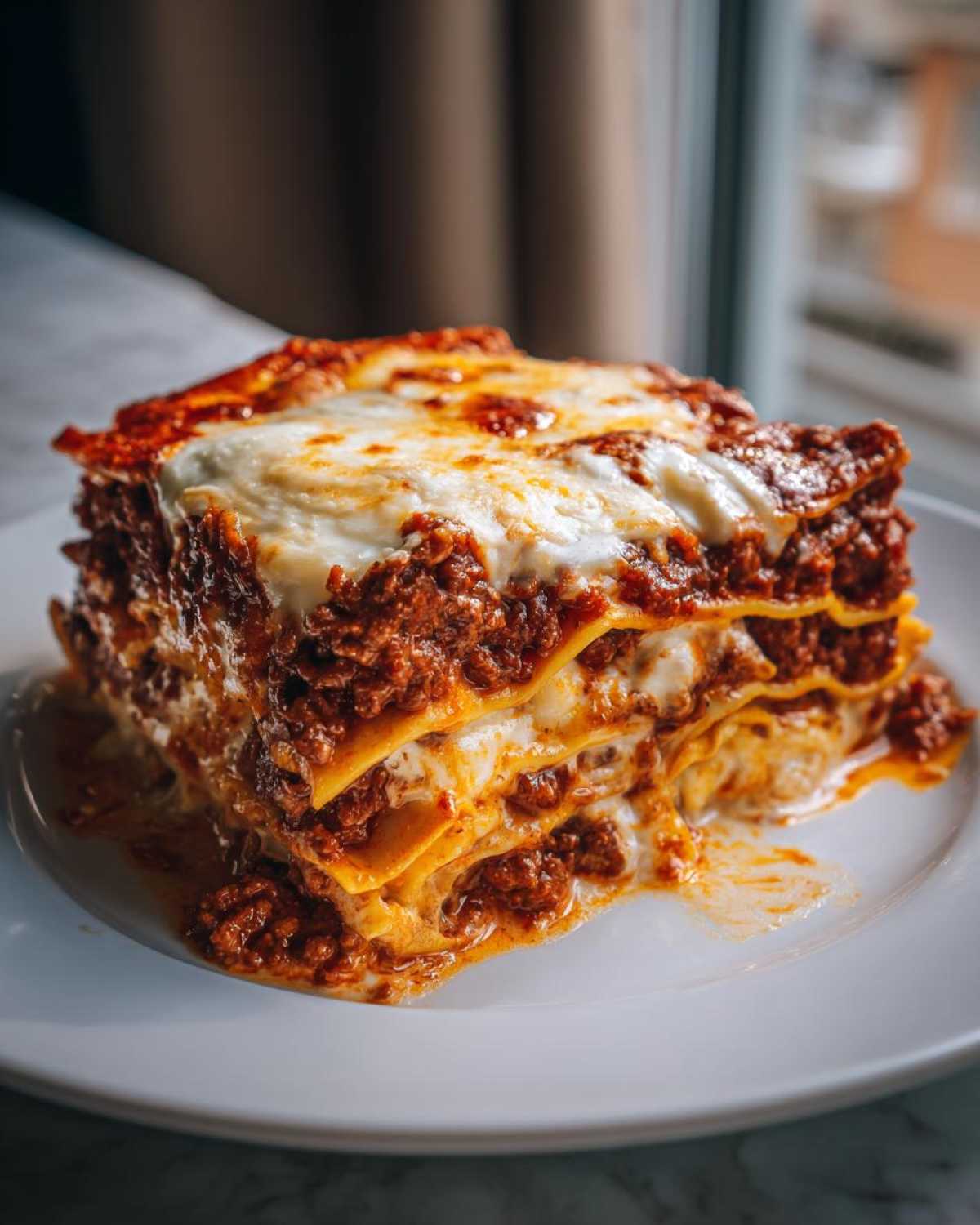
If you take that beautiful, piping-hot lasagna out of the oven and immediately try to cut into it, I’m going to stop you right there! Seriously, put the knife down. This next part is as important as simmering the sauce for an hour, so listen up. You must let that homemade lasagna rest for a full 15 minutes after it comes out of the oven.
Why? Because while it’s resting, all those hot liquids—the sauce, the melted cheese, the moisture from the ricotta—are settling back down into the layers. If you cut it too soon, everything liquefies right onto your serving platter, and you end up with a soupy mess instead of perfect squares. That 15 minutes gives the cheese structure time to firm up just enough. Trust me on this one; those few minutes of waiting result in clean slices that show off every single one of those beautiful layers you worked so hard to build!
Tips for Success Making Authentic Lasagna Layers
Now that you’ve mastered the making and the baking, I want to give you just a couple more insider secrets—things I learned the hard way over the years—to ensure every slice of your homemade lasagna is absolutely restaurant-worthy. These little tweaks take you from a good pasta bake to a truly authentic experience.
First up: Let’s talk noodles! If you are using the regular lasagna noodles that you have to boil, please, for the love of Nonna, do not overcook them! If they are totally floppy in the pot, they will turn to mush in the oven by the time they cook through. They must be quite firm, slightly underdone to the bite, when you pull them out. They finish cooking perfectly immersed in the sauce.
But, if you are strapped for time, no-boil noodles are your friend! However, you *must* account for that extra dryness in your final dish. If you decide to rely on the no-boil kind, use an extra half-cup of tomato sauce or water in your meat sauce recipe. The noodles suck up moisture like crazy while baking, and we don’t want dry patches hiding in your middle layers.
Another thing that used to drive me absolutely bonkers when I first started trying to make a great from scratch lasagna was the sauce consistency. If your sauce seems way too thick when you’re layering, don’t just try to spread that stiff stuff! Like I mentioned briefly before, stir in a little clear water or even a splash of plain tomato sauce until it’s easily spoonable and flows just a tiny bit. If the sauce is too thick, it won’t soak down into the pasta sheets, and you end up with dry, hard spots between the sauce zones.
Finally, think about your cheese distribution. Don’t put all your mozzarella right in the middle layers! Make sure you save a nice handful of mozzarella to place *underneath* that very top layer of noodles before you finish with the final cheese blanket. That little bit of cheese nestled right under the top noodle helps glue that cap layer down so it doesn’t shift or slide off when you go to slice your perfect, hearty Italian dinner.
Storing and Reheating This Hearty Italian Dinner
One of the absolute best things about making a massive pan of homemade lasagna is knowing you have leftovers for days! Seriously, it reheats even better than it tastes fresh—which is saying something, because you know this dish is already amazing. This kind of substantial hearty Italian dinner is perfect for packing up for lunches.
For simple storage in the fridge, wait until the lasagna has cooled down completely after that crucial 15-minute rest. Cover the baking dish tightly with plastic wrap first, and then another layer of foil on top. This double barrier keeps any fridge smells out and traps the moisture in. It will keep perfectly well in the refrigerator for about four days. I often serve square leftovers straight from the fridge the next day; a quick reheat is all it needs!
Reheating Strategies: Stove Side or Oven?
If you plan on eating a single slice, the microwave is totally fine. Pop a square onto a microwave-safe plate, cover it with a paper towel (to keep the edges from getting tough), and zap it for 60 to 90 seconds, checking the temperature halfway through. It warms up fast, but sometimes the cheese can get a little rubbery.
For the best result, especially if you are reheating a large section or the whole dish, the oven is the winner every time. If you’re reheating the entire pan, cover it again tightly with foil, and pop it back into a 350-degree oven. It usually takes 25 to 35 minutes to get it piping hot all the way through. If you’re just reheating a slice or two from the fridge, wrap the portion loosely in foil and bake for about 20 minutes until it’s steaming hot in the center.
Freezing This Make Ahead Lasagna for Later
This is where having a make ahead lasagna truly shines! You can absolutely freeze this before baking, but I prefer freezing leftovers once they are cooked. Once cooled, cut the lasagna into serving portions. Place the slices on a baking sheet and freeze them until solid—this prevents them from sticking together when you stack them.
Transfer the frozen portions into heavy-duty freezer bags or airtight containers. They hold up beautifully in the freezer for up to three months. When you’re ready to eat one, it’s best to thaw it in the fridge overnight if you can. If you’re in a hurry, you can bake straight from frozen, you just need to add about 15 to 20 minutes extra to the covered baking time to make sure the center thaws out properly before the cheese burns.
Frequently Asked Questions About Homemade Lasagna
I know when you’re tackling an amazing homemade lasagna recipe, questions pop up! It’s totally normal, especially when you’re aiming for that perfect, melt-in-your-mouth texture. Here are the few things I get asked all the time about making sure this best lasagna recipe works flawlessly every single time.
Can I use cottage cheese instead of ricotta for my lasagna with ricotta cheese?
Oh, the classic substitution question! You absolutely *can* substitute cottage cheese for ricotta, but you have to treat it right first. Cottage cheese tends to have more liquid, which can make your filling watery, and the texture isn’t quite as smooth. If you are in a pinch, take that cottage cheese and put it in a food processor with just a tiny splash of milk—pulse it until it’s virtually smooth. That way, you get a much closer texture to the creamy ricotta filling we’re aiming for in this recipe! It makes a difference for your cheesy lasagna recipe.
How do I prevent the edges of my lasagna from burning?
This happens mostly if you’re baking it for a long time uncovered, but my trick is all about foil placement! If you notice the corners and edges of the noodles getting dark or crispy before the center is hot—and remember, we need that center hot for safety and taste—just grab another sheet of aluminum foil. Lightly grease the underside of the foil so it doesn’t stick to the cheese, and place it loosely over the entire dish like a shallow tent. This shields the edges from direct heat while allowing the middle to catch up. It’s worked for me every single time I bake my Italian baked pasta!
Can I easily adapt this recipe to be vegetarian?
That’s a great thought for a lighter meal! You can absolutely make this vegetarian, which would turn it into a heartier veggie pasta bake. When it comes to the sauce, you’ll skip the beef and sausage entirely. Instead, sauté lots of finely chopped mushrooms (cremini work best!), carrots, celery, and maybe some crumbled walnuts or lentils for texture right where the meat would go. You simmer that with all the tomatoes and herbs exactly the same way. Everything else—the ricotta, the mozzarella—stays exactly the same for your from scratch lasagna!
Is this really considered an Easy Homemade Lasagna, or is it complex?
It’s easy in terms of active time, but it requires patience, which sometimes people confuse! The steps for the meat sauce are mostly hands-off—you’re just letting it simmer while you work on the ricotta mix or clean up a bit. The assembly is very straightforward once you know the layering pattern. I wouldn’t call it “quick” because the sauce needs an hour to simmer, but it’s definitely an easy homemade lasagna if you don’t rush the sauce. It’s all about setting aside dedicated time for that beautiful, rich flavor!
Estimated Nutritional Data for Cheesy Lasagna Recipe
I always run the numbers just to see where we stand, but remember, these estimates can jump around depending on the fat content of the sausage you choose or how much extra cheese you decide to sneak in (I don’t judge!). This is calculated based on the provided standard recipe amounts for 8 generous servings. Please treat these figures as a general guide for your cheesy lasagna recipe.
- Serving Size: 1 slice
- Calories: Approximately 550 kcal
- Fat: Around 30g (with 14g of that being saturated fat)
- Protein: A whopping 35g—it’ll definitely stick to your ribs!
- Carbohydrates: About 45g
- Sugar: Roughly 12g (Mostly natural sugar from the tomatoes)
- Cholesterol: Near 95mg
This is a hearty meal, for sure, packed with protein and great ingredients, but it’s definitely a treat that keeps you full for hours!
PrintThe Best Classic Homemade Lasagna with Rich Meat Sauce and Creamy Ricotta Layer
Make a satisfying, classic lasagna from scratch featuring a slow-simmered meat sauce and a smooth, creamy ricotta cheese filling. This recipe is perfect for family dinners.
- Prep Time: 30 min
- Cook Time: 1 hour 30 min
- Total Time: 2 hours 0 minutes
- Yield: 8 servings
- Category: Dinner
- Method: Baking
- Cuisine: Italian
- Diet: Vegetarian
Ingredients
- 1 pound ground beef
- 1 pound Italian sausage, casing removed
- 1 large onion, chopped
- 4 cloves garlic, minced
- 2 (28 ounce) cans crushed tomatoes
- 1 (15 ounce) can tomato sauce
- 2 tablespoons tomato paste
- 1 teaspoon dried oregano
- 1 teaspoon dried basil
- 1/2 teaspoon salt
- 1/4 teaspoon black pepper
- 1 box (16 ounces) lasagna noodles
- 1 (15 ounce) container whole milk ricotta cheese
- 1 large egg
- 1/4 cup grated Parmesan cheese, plus more for topping
- 2 tablespoons chopped fresh parsley
- 4 cups shredded mozzarella cheese
- 1/4 cup water (for sauce thinning)
Instructions
- Brown the ground beef and sausage in a large pot over medium heat. Drain excess fat.
- Add the chopped onion to the meat and cook until soft, about 5 minutes. Add the minced garlic and cook for 1 minute more.
- Stir in the crushed tomatoes, tomato sauce, tomato paste, oregano, basil, salt, and pepper. Bring the sauce to a simmer, then reduce heat to low, cover, and cook for at least 1 hour, stirring occasionally. Add 1/4 cup water if the sauce becomes too thick.
- While the sauce simmers, cook the lasagna noodles according to package directions until al dente. Drain the noodles and lay them flat on parchment paper to prevent sticking.
- In a medium bowl, mix together the ricotta cheese, egg, 1/4 cup Parmesan cheese, and parsley until combined. This is your ricotta mixture.
- Preheat your oven to 375 degrees F (190 degrees C). Lightly grease a 9×13 inch baking dish.
- Spread a thin layer of meat sauce on the bottom of the prepared baking dish.
- Arrange a layer of cooked noodles over the sauce, slightly overlapping if necessary.
- Spread half of the ricotta mixture evenly over the noodles.
- Sprinkle one-third of the mozzarella cheese over the ricotta layer.
- Spoon half of the remaining meat sauce over the mozzarella.
- Repeat the layers: noodles, the remaining ricotta mixture, one-third of the mozzarella, and the rest of the meat sauce.
- Top with a final layer of noodles, the remaining mozzarella, and a sprinkle of extra Parmesan cheese.
- Cover the dish tightly with aluminum foil. Bake for 25 minutes.
- Remove the foil and bake for an additional 20-25 minutes, or until the cheese is melted, bubbly, and lightly browned.
- Let the lasagna rest for 15 minutes before slicing and serving.
Notes
- You can prepare the meat sauce one day ahead and refrigerate it. This deepens the flavor.
- To make this a make-ahead meal, assemble the entire lasagna, cover tightly, and refrigerate for up to 24 hours before baking. Add 10-15 minutes to the covered baking time if baking directly from the refrigerator.
- For a richer flavor, substitute half of the ground beef with ground veal.
Nutrition
- Serving Size: 1 slice
- Calories: 550
- Sugar: 12
- Sodium: 750
- Fat: 30
- Saturated Fat: 14
- Unsaturated Fat: 16
- Trans Fat: 0
- Carbohydrates: 45
- Fiber: 5
- Protein: 35
- Cholesterol: 95