

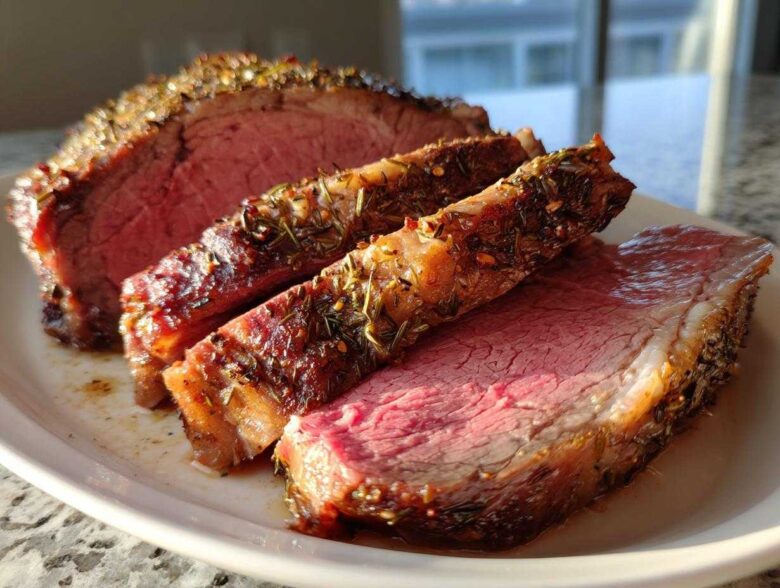
Oh my gosh, if you’re anything like me, the pressure of cooking the absolute centerpiece for a holiday or big family dinner can be terrifying! Are you worried about overcooking that gorgeous roast? I totally get it. I’ve messed up enough standing rib roasts over the years that I finally perfected *my* method. Trust me, after years of testing and tweaking for our Christmas dinners, I figured out the foolproof way. This is the oven method for the magnificent beef centerpiece that guarantees a juicy, medium-rare prime rib every single time. Seriously, this technique takes all the guesswork out of getting that perfect pink edge.
We are going to focus on a high-heat sear to build flavor right upfront, followed by a gentle slow roast. It sounds fancy, but honestly, it’s the easiest way I’ve found to nail that temperature perfectly. I linked my favorite slow cooker recipe here if you need a weeknight backup plan, but for the big show? This prime rib is your star.
Why This is the Perfect Prime Rib Roast Method
You need this method in your back pocket because it solves the biggest roast beef drama: the gray band around the outside! We’re creating a technique that gives you maximum meat flavor without drying out the outer edges. I call it the ‘Sear THEN Soothe’ approach because that’s exactly what it does.
The initial blast at 450 degrees F is purely for the Maillard reaction—that’s fancy talk for browning—which creates the deep, incredible crust flavor you want on your Perfect Prime Rib Roast. This is where all that wonderful garlic herb flavor locks itself in. Then, we drop the temperature way down to 325 degrees F for the slow roast.
This two-stage roasting is the secret for a Tender Prime Rib Guide, honestly. The gentle low heat allows the inside of the roast to cook evenly toward a beautiful medium-rare without overcooking the parts near the pan. Seriously, temperature control is everything here. You really need a good meat thermometer for this, but once you see the results, you’ll never go back to just guessing. It’s the most reliable way to guarantee that juicy center every single holiday!
If you’re looking for other incredibly reliable slow-cooked meats for parties, you have to check out my recipe for Mississippi Pot Roast; it’s another effortless winner.
Ingredients for Your Garlic Herb Crusted Prime Rib
Okay, let’s talk about what goes into this absolute showstopper of a roast! It seems complicated because it’s so flavorful, but when you look at the list, it’s just beautiful, simple ingredients working together. You want the best quality roast you can find, which means sourcing a beautiful 5-to-7-pound standing rib roast—that’s the one we call Prime Rib! Make sure it’s got a good cap of fat on it; that fat is flavor, honey, don’t trim too much!
We’re making the flavor paste first, and then we handle the little sauce on the side. If you’ve seen my recipe for Garlic Butter Steak Bites, you know I love a good herb crust, and this one packs a punch!
For the Garlic Herb Prime Rib Crust
- 1 (5-7 lb) standing rib roast (Prime Rib), 2-3 ribs
- 3 tablespoons olive oil
- 6 cloves garlic, minced
- 2 tablespoons fresh rosemary, chopped
- 1 tablespoon fresh thyme leaves
- 1 tablespoon coarse salt
- 1 teaspoon black pepper
Remember, I stressed using fresh rosemary and thyme—the dried stuff just doesn’t cut it when you’re making something this special. And that coarse salt? It really helps create that amazing texture on the crust. Don’t skimp!
For the Simple Prime Rib Au Jus Sauce
- 1/2 cup beef broth
- 1 tablespoon cornstarch mixed with 2 tablespoons cold water (that slurry has to be cold water, or it lumps! Trust me on this one.)
That’s it! The rest of the deliciousness for the au jus comes straight from the drippings in your roasting pan, which is why you need to save every last drop!
Step-by-Step Instructions for Oven Roasted Prime Rib
Alright, this is where the magic happens! Getting the sequence right for your Oven Roasted Prime Rib is the key to earning bragging rights. I want you to feel confident tackling this roast, even if it’s your first time making a grand centerpiece. We’re making a How To Cook Prime Rib Medium Rare happen, and it all starts before the oven even turns on.
First things first: patience! You can’t rush the temperature coming up. Get that beautiful roast out of the fridge at least two, maybe three hours before you plan to cook it. Letting it temper to room temperature guarantees that even cooking we were just talking about. While it’s warming up, preheat that oven to 450 degrees F. We need that initial shocker heat!
While you wait, mix up that garlic herb paste we prepped—just slather it on generously everywhere. And listen to me: use your meat thermometer. This isn’t optional for a perfect roast; this is how we prove we know what we’re doing! You can find my current favorite thermometer here if you need an upgrade for precision cooking. Now, let’s get this meat in the heat!
Preparing the Prime Rib and Oven Setup
Take your roast, fat-side up, and set it on a rack inside your sturdy roasting pan. That rack is important; it lets the heat wrap all the way around the beef. Once everything looks ready and the oven is screaming hot at 450 degrees F, slide that roast in!
We sear hard for exactly 15 minutes. This locks in all those wonderful aromatics from the herb crust and gives us that fantastic browned exterior. When that timer dings dramatically, pull the pan out—don’t panic, we aren’t done!
Immediately drop the oven temperature down to 325 degrees F. It feels like a big temperature swing, but this is the core of the foolproof method. This controlled heat gently guides the center of that prime rib toward perfection.
Roasting the Prime Rib to Perfection
Now it’s low and slow time. You are going to roast at 325 degrees F until your thermometer reads 125 degrees F. For a 6-pound roast, this might take about an hour and a fifteen minutes, maybe a little more. Always check the center of the thickest part, avoiding touching the bone directly, as that gives you a false, high reading.
The second that thermometer hits 125 degrees F, you pull it out! Seriously, take it out the second it hits that number. This is the secret to a genuinely Juicy Prime Rib Recipe. If you wait even five more minutes, you might end up with medium instead of the perfect medium-rare we are aiming for.
The Crucial Resting Period for Your Prime Rib
This might be the hardest step because you’re staring at that gorgeous hunk of meat, but you must let it rest! Tent it loosely with foil—don’t wrap it tight, or you’ll steam that beautiful crust we worked to create. Set a timer for 20 minutes.
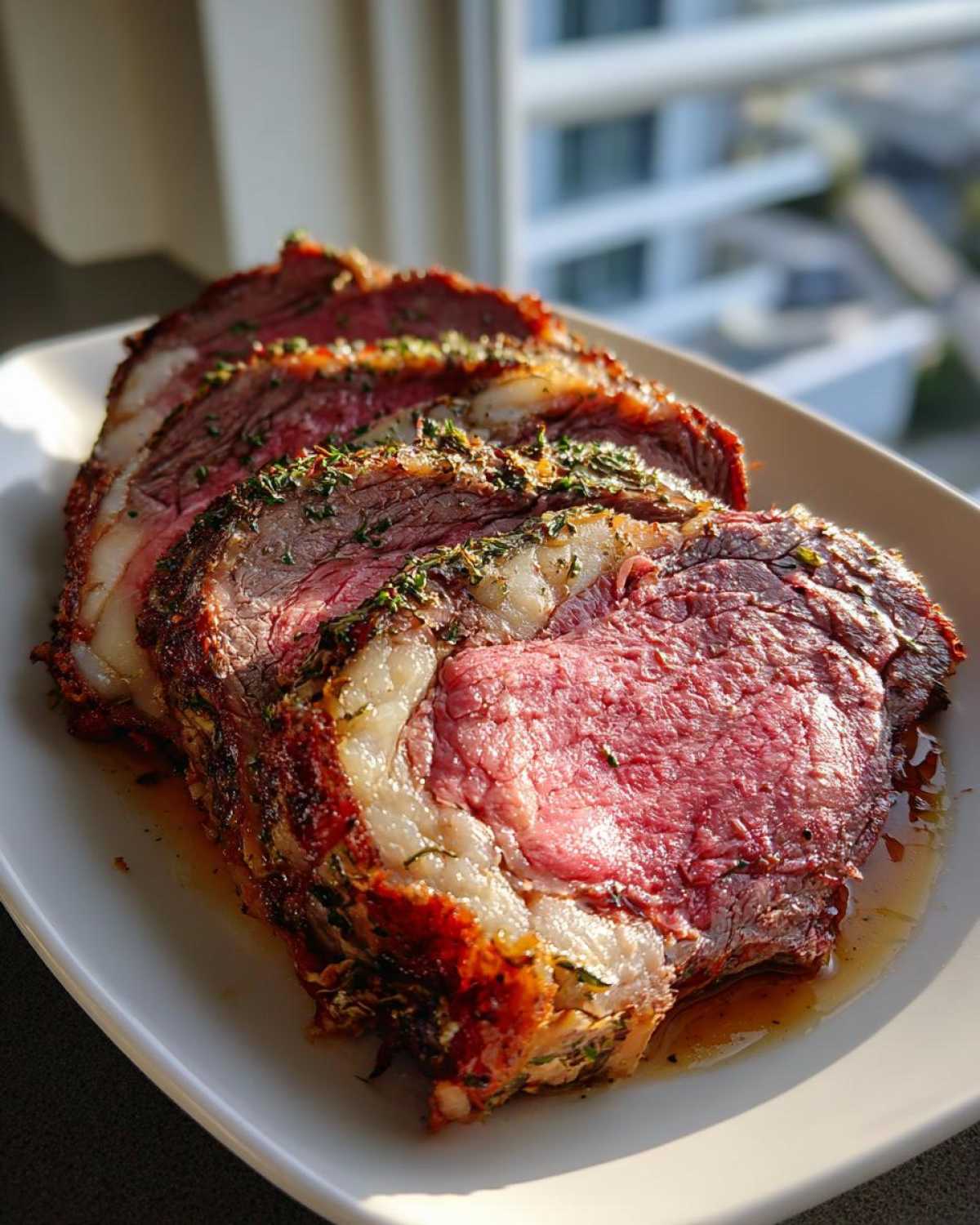
During this time, something amazing happens called carryover cooking. That internal temperature we pulled it at (125°F) is going to creep up another 5 to 10 degrees, landing you perfectly in the 130 to 135 degree range for medium-rare. More importantly, resting lets those juices, which rushed to the center under the heat, redistribute throughout the entire roast. If you slice it early, all that deliciousness runs out onto your cutting board. Believe me, I learned that lesson the very hard way!
Making the Quick Prime Rib Au Jus Sauce
Once the roast is relaxing under the foil, we use those amazing drippings! Carefully pour them into a saucepan through a fine-mesh sieve to catch any charred herb bits. You want to skim off as much of that thick solidified fat as you can, leaving behind that wonderful liquid gold.
Add your beef broth to the saucepan and bring that mixture up to a gentle simmer over medium heat. Now, grab that cornstarch and cold water slurry we mixed earlier. Whisk it gently into the simmering liquid. Keep whisking for just a minute or two until you notice it thickens up just slightly. We don’t want a gravy here, remember? We just want a thin, flavorful drizzle—the perfect Prime Rib Au Jus Sauce to accompany your slices.
Expert Tips for a Foolproof Prime Rib Method
I know I sound like a broken record, but these little details are what take your roast from good to absolutely legendary. These are the tried-and-true tricks I pulled directly from the margins of my very first handwritten recipe card for this standing rib roast. If you want a truly Foolproof Prime Rib Method, pay close attention to three things: how you prep the roast, how you rest it, and how you carve it.
My biggest piece of advice? Never skip the resting step! I remember the first time I got antsy after cooking what I thought was the perfect roast. I pulled it out, figured 10 minutes would do, and immediately sliced into it for a picture for my mom. The juices just flooded the cutting board—a total disaster! It was still tasty, sure, but it wasn’t *tender*. Ever since that day (that was forever ago!), I set a full 20-minute timer, grab a glass of wine, and walk away. When I came back, the meat felt completely different under the knife, and the texture was incomparably better. That 20 minutes is non-negotiable for that beautiful slice of medium-rare beef.
Here are a couple of other game-changers for achieving that Impressive Dinner Party Meat status:
- The Temporary Bone Removal Trick: If your roast is really bulky and you’re worried about carving, try this. Before you rub on that garlic herb paste, carefully slice the bones right off the back of the roast. Totally separate them! Then, season the bone side, place the bones back where they belong, and tie the whole thing tightly with butcher’s twine to hold its shape. Season the outside as normal. This lets the heat get around the meat more evenly, and when you’re done cooking, you just snip the twine and pull the bones right out. It makes carving so much cleaner!
- Don’t Hesitate on Medium: I preach medium-rare (pulling at 125°F), but if your family really prefers a slightly more cooked roast, you can aim for medium doneness. Just make sure you pull the prime rib when your thermometer hits 130°F instead of 125°F before you start that essential rest. Remember, it will rise another 3 to 5 degrees while it rests!
For more insights into what goes into keeping this entire blog running smoothly, you can check out the About Us page. But trust me, focusing on that temperature precision and resting time is 90% of the battle won with this magnificent beef centerpiece!
Serving Suggestions for Your Holiday Main Dish Ideas
Now that you’ve conquered that incredible roast and your kitchen smells like heaven, we have to talk about what plays nicely next to it on the plate! A roast this rich requires sides that are either bright and fresh or deeply satisfying and comforting. You want to create a plate that screams special occasion, making this a truly Impressive Dinner Party Meat.
I always lean into simplicity for the sides because the roast is the actual star that took all the attention. My kids basically demand my creamy mashed potatoes every single year—they are non-negotiable! We usually make those first and keep them warm while the roast is resting. If I need something green to cut through the richness, I toss some asparagus spears with olive oil and a tiny bit of lemon juice and roast them quickly alongside the au jus station.
For something a little more substantial, I love having a creamy element. Have you tried the Broccoli Cheddar Soup recipe here for a starter? It’s velvety smooth and definitely brings the cozy factor. It’s wonderful as a starter, but honestly, a small bowl alongside a slice or two of the roast is just delicious comfort food.
Here’s my quick side menu philosophy for serving this giant roast:
- Starch Priority: Creamy mashed potatoes or maybe a roasted garlic mashed sweet potato blend for a touch of color variance.
- Green Element: Something crisp, like roasted asparagus or maybe lightly sautéed green beans with slivered almonds.
- Bread Service: You absolutely must have some crusty rolls or sourdough bread on hand for sopping up every last bit of that delicious au jus sauce we made! Don’t waste a drop!
When done right, serving this roast feels effortless because the meat speaks for itself. You’ve already done the heavy lifting! Just make sure you have enough plates ready, because everyone is going to want seconds!
Storage and Reheating Instructions for Leftover Prime Rib
Listen, if you somehow manage to have leftovers of this incredible prime rib—which, let’s be honest, is a miracle—you need to treat that meat right. It’s too precious to let dry out in the fridge! The goal when storing and reheating is moisture retention, pure and simple. That amazing medium-rare center we fought so hard for can disappear fast if you reheat it like it’s just any old deli meat.
First, when slicing your leftovers, slice them thinly against the grain. This makes for easier eating, and frankly, it helps protect them during reheating. Place the slices into an airtight container. I like to use glass containers because they don’t hold onto smells, but any good air-tight container works wonders.
When you are ready to enjoy it again later in the week, we are going to use moisture as our shield. You can quickly reheat thin slices in one of two ways:
The Au Jus Bath Method: This is my all-time favorite way. Gently warm up whatever leftover Prime Rib Au Jus Sauce you managed to save—or just heat a little beef broth on the stove until it’s steaming but not boiling. Put your slices in a shallow baking dish, and just barely cover the bottom of the dish with the warm liquid. Cover the dish tightly with foil and pop it into a low oven (about 300 degrees F) for just a few minutes until they are warmed through. The steam keeps everything tender!
The Microwave Steamer Trick: If you are in a huge rush, place the slices on a microwave-safe plate. Put a paper towel dampened with water over the top of the meat. Microwave in 30-second bursts only until heated through. Again, the key is gentle heat!
If you have a huge amount that needs to last longer, freezing is your friend. You can freeze sliced prime rib for up to three months. Make sure the slices are tightly wrapped in plastic wrap first, then tucked inside a freezer bag. When thawing, move it to the fridge overnight. When reheating from frozen, definitely use that gentle broth or au jus method described above—it’s the only way to keep that incredible tenderness intact!
For future freezer planning, you might want to look at how I prep my freezer-friendly meals; even though this is beef, the wrapping and storage mentality is exactly the same!
Frequently Asked Questions About Cooking Prime Rib
I totally get it; when you’re cooking a roast this important, you are going to have questions! That’s okay! Cooking the Best Holiday Roast Beef should feel exciting, not scary. I pulled together the questions I get asked the most when someone is trying this specific tender prime rib guide for the very first time. Solving these little problems ahead of time is key to making sure your centerpiece is a showstopper!
If for some reason your questions aren’t answered here, feel free to reach out via my contact page—I love chatting about beef roasts!
What internal temperature is best for a medium-rare prime rib?
This is absolutely the most important question you can ask! For that perfect blush of pink, you are aiming to pull the roast out of the oven when your thermometer hits 125 degrees F. Seriously, pull it right then! Remember what I said about resting? That temperature is going to climb during the mandatory 20-minute rest, bringing your final temperature right into the 130 to 135 degree sweet spot. That’s textbook, beautifully cooked medium-rare beef!
Can I substitute fresh herbs for dried herbs in the prime rib crust?
Honestly, I really, really advise against it for this prime rib recipe. If you look at the ingredient list, we call for *fresh* rosemary and thyme. The flavor difference between fresh and dried is night and day, especially when you are searing the outside at such a high heat. Dried herbs tend to burn faster and taste dusty, not bright, which is what we need to complement the garlic.
However, if you are in a true emergency, the standard substitution ratio is 3-to-1 fresh to dried. So, for the 2 Tbsps of fresh rosemary we called for, you’d use only 2 teaspoons of dried rosemary in that paste. But please, try to grab the fresh bunch; that vibrant herbaceous flavor is a core part of what makes this crust so amazing contrasted with the rich beef!
Do I need to sear the prime rib if I am only roasting low and slow?
Oh, you could, technically, roast a standing rib roast low and slow the whole time without that initial 15-minute blast at 450 degrees F. But then, you wouldn’t have this recipe! The sear is what builds that deeply flavorful, textured crust. If you skip it, you end up with a lovely, tender piece of beef, yes, but it will taste more like boiled meat than roasted meat.
That initial sear creates the crispy, browned exterior that has those intense caramelized flavors. Without it, you miss what elevates this from just beef to the ultimate Impressive Dinner Party Meat centerpiece. The sear and the low roast work as a team to create the perfect package!
Nutritional Estimates for This Prime Rib Dinner
I always feel a tiny bit silly putting calorie counts on a holiday centerpiece like this because, let’s be real, we aren’t tracking macros when we are enjoying the ultimate Holiday Main Dish Ideas! But for those of you who need the information, I compiled the best estimates I could based on the ingredients in the recipe. Keep in mind these numbers can swing wildly depending on how much fat you trim away and how much of that heavenly Prime Rib Au Jus Sauce you drown your plate in!
These estimates are based on a standard serving size of six ounces of the cooked meat itself, before any heavy sides or extra sauce are factored in. This is based on following the basic recipe above, where we aimed for a perfectly cooked, juicy result. Remember, this data is just a guideline to help you plan one of the best meals of the year!
- Serving Size: 6 oz cooked meat
- Calories: 450
- Fat: 30g (With 12g of that being Saturated Fat)
- Protein: 42g
- Cholesterol: 140mg
- Sodium: 450mg (This can go up fast with added salt/broth for the au jus!)
- Carbohydrates & Fiber: Very low, just 1g Carb and 0g Fiber, as expected for pure beef!
We definitely aren’t calling this a low-fat meal, but that fat content is what makes the roast so incredibly flavorful and tender. If you are concerned about fat, this is where trimming any outside, non-rendered chunks before serving really helps; just be careful not to trim away the delicious crust! If you need to know more about how we handle user data on this site, you can check out our Privacy Policy. Enjoy every single bite of this magnificent roast!
Share Your Magnificent Beef Centerpiece Experience
Now that you’ve successfully navigated the world of high-heat searing and patient resting, I just have one thing left to ask you! I put my heart and soul into perfecting this prime rib method so you wouldn’t have to stress next time you tackle a big roast, and I truly want to know how it went for you!
Did you ace that medium-rare temperature? Did your family stop talking for five solid minutes when they saw the crust? I live for these stories! Drop your star rating down below and tell me all about it in the comments. Pictures are my absolute favorite thing, so if you snapped a shot of your finished roast—especially that first perfect slice—tag me on social media! I look forward to seeing your amazing results.
If you are already planning your next big meal, you might want to browse through all my tested and reliable recipes in the Dinner Category here on the site! Happy cooking, and thanks so much for trusting me with your holiday centerpiece!
PrintPerfect Oven Roasted Prime Rib with Garlic Herb Crust
Follow this method to cook a juicy, tender prime rib roast to a perfect medium-rare using a high-heat sear followed by slow roasting, complete with a simple au jus.
- Prep Time: 20 min
- Cook Time: 1 hr 45 min
- Total Time: 2 hr 5 min
- Yield: 6-8 servings
- Category: Main Course
- Method: Roasting
- Cuisine: American
- Diet: Low Fat
Ingredients
- 1 (5-7 lb) standing rib roast (Prime Rib), 2-3 ribs
- 3 tablespoons olive oil
- 6 cloves garlic, minced
- 2 tablespoons fresh rosemary, chopped
- 1 tablespoon fresh thyme leaves
- 1 tablespoon coarse salt
- 1 teaspoon black pepper
- 1/2 cup beef broth (for au jus)
- 1 tablespoon cornstarch mixed with 2 tablespoons cold water (for au jus)
Instructions
- Remove the prime rib from the refrigerator 2-3 hours before cooking to allow it to come closer to room temperature.
- Preheat your oven to 450 degrees F.
- In a small bowl, combine the minced garlic, rosemary, thyme, salt, pepper, and olive oil to create a paste.
- Rub the garlic herb paste evenly over the entire surface of the roast.
- Place the roast fat-side up on a rack in a sturdy roasting pan.
- Roast at 450 degrees F for 15 minutes to sear the exterior.
- Reduce the oven temperature to 325 degrees F. Continue roasting until the internal temperature reaches 125 degrees F for medium-rare. This usually takes about 13-15 minutes per pound after the initial sear. Use a meat thermometer inserted into the thickest part of the meat, avoiding bone.
- Remove the roast from the oven when it hits 125 degrees F. Tent loosely with foil and let it rest for 20 minutes. The internal temperature will rise to about 130-135 degrees F (medium-rare).
- To make the au jus, pour the pan drippings into a saucepan, leaving behind any large pieces of fat. Add the beef broth and bring to a simmer over medium heat.
- Whisk the cornstarch slurry into the simmering liquid until slightly thickened. Serve immediately alongside the sliced prime rib.
Notes
- Resting the meat is crucial; this allows the juices to redistribute, resulting in a more tender and moist roast.
- For easier carving, remove the bones from the roast before seasoning, then tie them back onto the roast with butcher’s twine. Remove the twine before serving.
- If you prefer medium doneness, pull the roast when the internal temperature reaches 130 degrees F before resting.
Nutrition
- Serving Size: 6 oz cooked meat
- Calories: 450
- Sugar: 0
- Sodium: 450
- Fat: 30
- Saturated Fat: 12
- Unsaturated Fat: 18
- Trans Fat: 0
- Carbohydrates: 1
- Fiber: 0
- Protein: 42
- Cholesterol: 140