Perfect Oven Roasted Prime Rib with Garlic Herb Crust
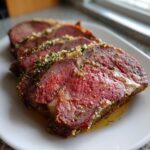
Follow this method to cook a juicy, tender prime rib roast to a perfect medium-rare using a high-heat sear followed by slow roasting, complete with a simple au jus.
- Prep Time: 20 min
- Cook Time: 1 hr 45 min
- Total Time: 2 hr 5 min
- Yield: 6-8 servings
- Category: Main Course
- Method: Roasting
- Cuisine: American
- Diet: Low Fat
Ingredients
Scale
- 1 (5-7 lb) standing rib roast (Prime Rib), 2-3 ribs
- 3 tablespoons olive oil
- 6 cloves garlic, minced
- 2 tablespoons fresh rosemary, chopped
- 1 tablespoon fresh thyme leaves
- 1 tablespoon coarse salt
- 1 teaspoon black pepper
- 1/2 cup beef broth (for au jus)
- 1 tablespoon cornstarch mixed with 2 tablespoons cold water (for au jus)
Instructions
- Remove the prime rib from the refrigerator 2-3 hours before cooking to allow it to come closer to room temperature.
- Preheat your oven to 450 degrees F.
- In a small bowl, combine the minced garlic, rosemary, thyme, salt, pepper, and olive oil to create a paste.
- Rub the garlic herb paste evenly over the entire surface of the roast.
- Place the roast fat-side up on a rack in a sturdy roasting pan.
- Roast at 450 degrees F for 15 minutes to sear the exterior.
- Reduce the oven temperature to 325 degrees F. Continue roasting until the internal temperature reaches 125 degrees F for medium-rare. This usually takes about 13-15 minutes per pound after the initial sear. Use a meat thermometer inserted into the thickest part of the meat, avoiding bone.
- Remove the roast from the oven when it hits 125 degrees F. Tent loosely with foil and let it rest for 20 minutes. The internal temperature will rise to about 130-135 degrees F (medium-rare).
- To make the au jus, pour the pan drippings into a saucepan, leaving behind any large pieces of fat. Add the beef broth and bring to a simmer over medium heat.
- Whisk the cornstarch slurry into the simmering liquid until slightly thickened. Serve immediately alongside the sliced prime rib.
Notes
- Resting the meat is crucial; this allows the juices to redistribute, resulting in a more tender and moist roast.
- For easier carving, remove the bones from the roast before seasoning, then tie them back onto the roast with butcher’s twine. Remove the twine before serving.
- If you prefer medium doneness, pull the roast when the internal temperature reaches 130 degrees F before resting.
Nutrition
- Serving Size: 6 oz cooked meat
- Calories: 450
- Sugar: 0
- Sodium: 450
- Fat: 30
- Saturated Fat: 12
- Unsaturated Fat: 18
- Trans Fat: 0
- Carbohydrates: 1
- Fiber: 0
- Protein: 42
- Cholesterol: 140
Find it online: https://kitchnkudos.com/perfect-prime-rib-oven-roast-recipe/